
Blood Sugar and Brain Health: Why I Always Look at These 3 Markers
June is Alzheimer's & Brain Awareness Month, making it a great time to talk about one of the most overlooked factors influencing long-term brain health: blood sugar.
Most people associate elevated blood sugar with diabetes, but its impact extends far beyond metabolic health. Research continues to show that blood sugar regulation plays an important role in cognitive function, memory, and overall brain health.
The challenge is that changes can begin long before a diagnosis is made and often before symptoms appear.
When I review labs, there are three markers I always pay attention to:
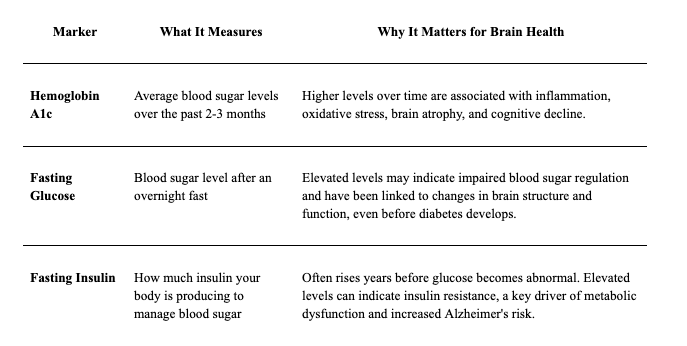
Together, these markers can provide valuable insight into how the body is managing blood sugar and whether dysfunction may be developing beneath the surface.
1. Hemoglobin A1c: The Long-Term Picture
Hemoglobin A1c reflects your average blood sugar levels over the previous 2 to 3 months.
Many people only become concerned when this marker enters the prediabetic or diabetic range. However, trends can often be identified much earlier.
Why it matters for the brain:
Chronically elevated blood sugar can contribute to inflammation and oxidative stress, both of which are associated with cognitive decline. Research has also linked higher A1c levels with brain atrophy and changes in memory and cognitive performance.
This is one reason I often look beyond simply whether a value falls within the standard reference range.
2. Fasting Glucose: Your Baseline Blood Sugar
Fasting glucose measures blood sugar after an overnight fast.
While it provides a useful snapshot, it is only one piece of the puzzle. Many individuals can maintain a normal fasting glucose while compensatory mechanisms are already occurring behind the scenes.
Why it matters for the brain:
Studies have shown that even blood sugar levels on the higher end of the normal range may be associated with changes in brain structure and function over time.
Blood sugar dysregulation does not need to reach diabetic levels before it begins affecting overall health.
3. Fasting Insulin: The Early Warning Marker
This is one of my favorite markers because it often identifies dysfunction before glucose or A1c become elevated.
Insulin is the hormone responsible for helping move glucose from the bloodstream into cells. When the body becomes less responsive to insulin, the pancreas compensates by producing more.
This process can continue for years before blood sugar levels begin to rise.
Why it matters for the brain:
Insulin resistance has been associated with inflammation, impaired energy metabolism in the brain, and changes that are commonly observed in Alzheimer's disease.
For this reason, fasting insulin can provide valuable insight into metabolic health long before a diagnosis occurs.
4. The Brain and Blood Sugar Connection
The brain is one of the body's most energy-demanding organs.
It relies on a steady supply of fuel and functions best when blood sugar remains relatively stable. Frequent spikes and crashes can contribute to inflammation, oxidative stress, and metabolic dysfunction over time.
The good news is that blood sugar regulation is highly responsive to lifestyle changes.
Simple strategies include:
Prioritizing protein at meals
Including fiber-rich foods
Limiting excess added sugars
Strength training regularly
Walking after meals
Getting adequate sleep
Managing stress
These habits support both metabolic and brain health.
5. Why "Normal" Isn't Always the Full Story
One of the most common things I hear from clients is:
"My doctor said everything looked normal."
Normal and optimal are not always the same thing.
Lab reference ranges are designed to identify disease, but they do not always capture early dysfunction. Looking at patterns across multiple markers often provides a more complete picture of what's happening beneath the surface.
This allows us to identify opportunities for intervention before bigger problems develop.
When to Take a Deeper Look
If you have a family history of Alzheimer's disease, cognitive decline, diabetes, or metabolic dysfunction, it may be worthwhile to evaluate these markers more closely.
I often combine standard blood work with a comprehensive review of lifestyle, nutrition, and other functional markers to better understand what may be contributing to risk.
Final Thoughts
Brain health is not something that starts later in life. It is something we build every day through the choices we make and the habits we practice.
Markers like hemoglobin A1c, fasting glucose, and fasting insulin can offer valuable insight into brain health long before symptoms appear.
By identifying patterns early and addressing root causes, we can create a stronger foundation for long-term cognitive health.
If you are interested in taking a deeper look at your labs and understanding what they may mean for your overall health, I work with clients one-on-one to develop personalized nutrition and lifestyle strategies based on their individual needs.